


What is Shopify B2B?
Shopify B2B is the set of wholesale tools built into Shopify. It lets you sell to other businesses from the same admin you use for retail, with company accounts, their own prices, payment terms and order minimums, instead of running a separate wholesale site.
The core pieces:
- Companies and locations. Each business customer is a company with one or more locations, and each location has its own buyers, addresses, payment terms and permissions.
- Catalogs. Your wholesale price lists. Each one sets which products a buyer sees and at what price.
- Payment terms. Net 7 through to Net 90, or due on fulfilment, so trade customers can order now and pay later.
- Quantity rules and volume pricing. Minimums, maximums, pack sizes and price breaks for buying more.
- Buying tools. PO numbers, a quick order list, easy reorders and a trade theme built for bulk ordering.
You can run it in a blended store, where retail and wholesale customers share one site, or in a dedicated B2B only store. Blended is simpler if you sell to a handful of stockists. A dedicated store suits a big trade range or a very different trade brand.
Which Shopify plans include B2B?
As of November 2026, Shopify B2B is included on the Basic, Grow, Advanced and Plus plans. It isn't available on Starter or Retail. The big difference is catalogs: Basic, Grow and Advanced allow up to 3 active catalog assignments, while Plus has no limit and adds deposits, partial payments and catalogs assigned to a single company.
| Feature | Basic | Grow | Advanced | Plus |
|---|---|---|---|---|
| Price (AUD) | About $42 a month billed yearly, $56 monthly | About $114 a month billed yearly, $149 monthly | About $431 a month billed yearly, $575 monthly | From about $3,700 a month on a 3 year term, $4,000 on a 1 year term |
| Active catalog assignments | Up to 3 | Up to 3 | Up to 3 | Unlimited |
| Catalogs assigned to one company or location | No | No | No | Yes |
| Companies, locations and buyer permissions | Yes | Yes | Yes | Yes |
| Net payment terms and payment reminders | Yes | Yes | Yes | Yes |
| Deposits and partial payments | No | No | No | Yes |
| Quantity rules and volume pricing | Yes | Yes | Yes | Yes |
| Vaulted cards, PO numbers, draft order to invoice | Yes | Yes | Yes | Yes |
| Storefront and checkout tailored to each B2B market | No | No | Yes | Yes |
Prices and features are from Shopify's Australian pricing page and its B2B plan features page as of November 2026. Shopify's pricing page doesn't say whether GST is included, so check your first bill. Card processing and apps are extra.
How do wholesale price lists work in Shopify B2B?
In Shopify B2B, a price list is a catalog. Each catalog picks which products are included and sets their prices, either as a percentage adjustment on your retail price or as fixed prices per product. Volume price breaks and quantity rules sit on top.
On Basic, Grow and Advanced, you assign catalogs to B2B markets, and the company locations in that market get those prices. You get up to 3 active catalog assignments, and one catalog assigned to two markets uses two of them. On Plus you can also assign a catalog straight to one company or location, which is how you'd give a single big account its own negotiated pricing.
For many Australian wholesalers, 3 is enough. An example setup:
- Trade: 20% off retail, minimum of 6 units per product.
- Wholesale: 35% off retail, sold in cartons of 12.
- Distributor: fixed prices per product, with price breaks at 100 and 500 units.
If you need more tiers than that, or a different price for every customer, you're choosing between Plus and a wholesale app. At about $3,700 a month for Plus, an app is the cheaper answer for most small brands. If you're on Plus for other reasons, native catalogs are cleaner.
How do net terms and company accounts work on Shopify?
You set payment terms on each company location, and buyers see them when they order. Shopify offers Net 7, 15, 30, 45, 60 and 90, due on fulfilment, or a fixed date on draft orders. Terms start from the day the order is placed.
A few details that catch people out:
- Payments aren't captured automatically when terms run out. The order shows as overdue, and you capture the payment in the admin.
- Buyers can pay early from their customer account, and payment reminders are on every plan with B2B.
- Deposits need Plus. If you want a percentage upfront and the rest on terms, that's a Plus feature.
- Vaulted cards let a trade customer save a card for future orders.
Company accounts hold the rest: each location's buyers, shipping and billing addresses, and who's allowed to order or manage the account. Sales staff permissions control what your reps can do for each account. If your bookkeeper wants those B2B invoices in Xero or MYOB without retyping, a Xero integration handles it, either with an off-the-shelf connector or a custom build.
Do you still need a wholesale app on Shopify?
For many stores, no. If you're on Basic, Grow or Advanced and your wholesale pricing fits in 3 tiers with net terms and minimum orders, the native tools cover it and you skip another app subscription.
Before you add an app, check whether the native features already do the job, because Shopify now includes B2B on every plan from Basic up. Apps and custom work still make sense when you need:
- More than 3 price tiers, or a price for each customer, without moving to Plus.
- A sign up and approval process the native setup doesn't fit.
- A connection to an ERP, warehouse or quoting system.
Our rule: start native, add an app only for a specific gap, and keep the app count low. Every app adds a monthly fee and one more thing that can break at checkout.
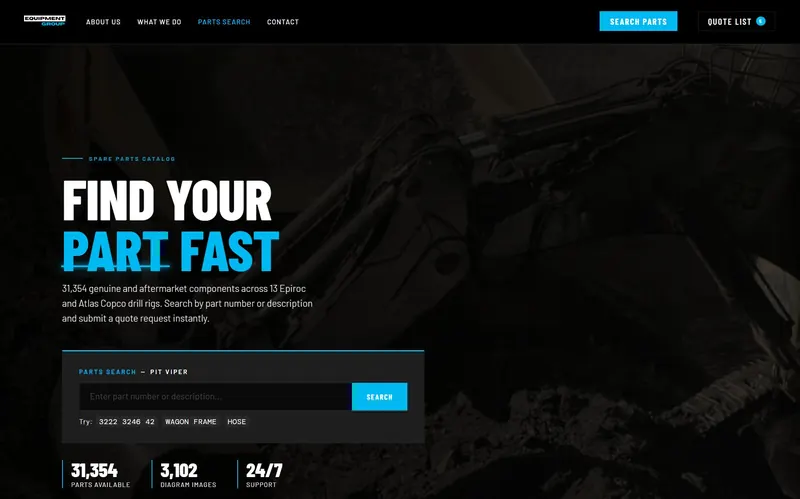
Shopify isn't the answer for every B2B business. If your buyers need quotes rather than a cart, with thousands of part numbers and prices that change per job, a custom system can fit better. For Equipment Group, a Perth mining parts supplier, we extracted 31,354 unique parts from 13 PDF catalogues into 35,268 search pages with a custom RFQ system and no CMS. That's a different kind of build to a Shopify store, and it suits quote led buying.
How to set up Shopify B2B, step by step
The settings are the quick part. Here's the order I set it up in:
- Check your plan. You need Basic, Grow, Advanced or Plus. Starter and Retail don't include B2B.
- Choose blended or dedicated. One store for retail and wholesale, or a separate B2B only store.
- Create companies and locations for each trade customer, with their buyers, addresses and payment terms.
- Build your catalogs with products, percentage or fixed prices, quantity rules and volume price breaks.
- Assign catalogs to B2B markets, or straight to companies on Plus.
- Set up the storefront for trade buyers: a quick order list, easy reorders and clear minimums.
- Run a test order as a buyer, right through checkout, terms, invoice and payment capture.
- Invite your trade customers to log in and place their first order.
Most of the time goes into the data, not the settings: clean product lists, agreed prices for each tier and correct customer details. Have those in a spreadsheet before you start and Shopify B2B setup moves quickly.
What does a Shopify B2B store cost to build?
A Shopify store from Source Digital starts at $4,500 + GST, as a fixed price in writing before work starts. The quote covers the B2B setup you need, based on how many catalogs, companies and integrations are involved, and most stores go live in 2 to 4 weeks.
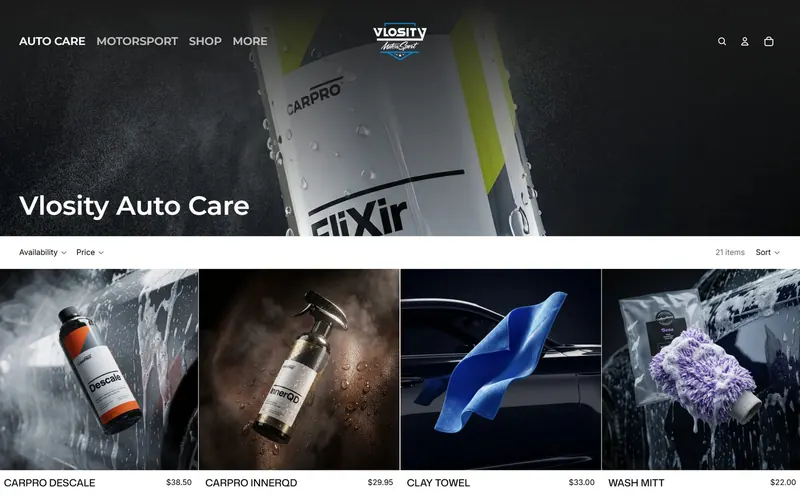
We build in Perth for brands across Australia, with one point of contact from quote to launch and no outsourcing. Recent Shopify work includes Malaya Swimwear, a Perth swimwear brand rebuilt on a bespoke Shopify theme with 21 products launched in 3 weeks, and Vlosity Motorsport, where a Wix services site and a separate Shopify store were merged into one Shopify site with service bookings and 28 products migrated.
If you're comparing quotes, our guide to website cost in Australia shows what stores cost to build and run. When you're ready, ask for a fixed quote and tell me how you sell to trade customers today.
One page for a single service in a tight area.
- One page, mobile first
- Tap to call and a quote form
- Google Business Profile linked
- Basic SEO and tracking
Most tradies and service businesses.
- 5 to 8 pages, one per service
- Written for local and AI search
- Your real photos, no stock
- Schema, analytics and Search Console
Shopify or a custom storefront.
- Store design and setup
- Products, payments and shipping
- SEO for every product page
- Launch support
Booking systems, portals and web apps.
- Hand-coded for speed
- Integrations and custom logic
- CRM and automation built in
- Scoped in writing first
Prices exclude GST. Hosting is separate, about $10 to $50 a month depending on platform. Ongoing changes and support from $200 a month.