

What should a plumber website have?
Good plumber website design starts with the customer standing in water. They're on a phone, the hot water's gone cold or a drain is backing up, and they give your site a few seconds to answer three questions: do you fix this, do you come to my suburb, and can I call you right now.
Every plumbing site we build is set up around those three questions:
- Your number in the header of every page, tap to call on mobile, so nobody has to scroll for it.
- Your hours stated honestly. If you do after hours or 24/7 call outs, say so up top. If you don't, say that too, so you're not fielding 2am calls you won't take.
- A page for each job you want more of, like blocked drains, hot water, gas fitting, leak detection and burst pipes.
- Your service area in plain words, so people know straight away whether you'll come out.
- Your plumbing licence number and insurance, because that's what careful customers check before they call.
- Real photos of your vans, team and jobs. Stock photos of a model holding a wrench cost you trust.
- Reviews and your Google Business Profile linked in, so the proof sits next to the call button.
How much does plumber website design cost?
Plumber website design with Source Digital starts at $1,750 + GST for a single page site and $3,250 + GST for a full business site with a page for each service. Every price is fixed and quoted in writing before work starts. Hosting runs about $10 to $50 a month depending on the platform.
Most plumbers are best on the business site. A single page can work if you only do one type of job in a small area, but separate pages for hot water, drains and gas are what let you show up for each of those searches. If you want changes done for you after launch, support starts from $200 a month.
One page for a single service in a tight area.
- One page, mobile first
- Tap to call and a quote form
- Google Business Profile linked
- Basic SEO and tracking
Most tradies and service businesses.
- 5 to 8 pages, one per service
- Written for local and AI search
- Your real photos, no stock
- Schema, analytics and Search Console
Shopify or a custom storefront.
- Store design and setup
- Products, payments and shipping
- SEO for every product page
- Launch support
Booking systems, portals and web apps.
- Hand-coded for speed
- Integrations and custom logic
- CRM and automation built in
- Scoped in writing first
Prices exclude GST. Hosting is separate, about $10 to $50 a month depending on platform. Ongoing changes and support from $200 a month.
Which pages does a plumbing website need?
A plumbing website needs a page for each service people search for, a page for the areas you cover, and an about page that shows your licence and team. Here's how that usually maps out:
| Page | What people search | Why it earns its place |
|---|---|---|
| Emergency plumbing | "emergency plumber near me", "24 hour plumber" | The most urgent searches, and the ones most likely to call straight away |
| Blocked drains | "blocked drain plumber", "drain camera inspection" | Common, repeat work that's easy to price |
| Hot water systems | "hot water repairs", "hot water system replacement" | Higher value jobs, often booked within a day or two |
| Gas fitting | "gas plumber", "gas leak repair" | Only worth a page if you hold the licence and want the work |
| Leak detection | "leak detection plumber", "water leak under slab" | People searching this already know they have a problem |
| Service areas | "plumber [suburb]" | Tells Google and customers exactly where you work |
| About and licence | Your business name | Where people check you're licensed, insured and real |
The rule in plumber website design is simple: only build pages for work you actually want. A page for bathroom renovations will bring in bathroom renovation enquiries, so leave it off if you'd rather not do them.
How do plumbers win more emergency calls from their website?
Emergency calls go to the plumber who is easiest to reach first. That means a site that loads fast on mobile data, a number that's one tap away, and a quick reply to every form and missed call.
The reply part is where most plumbers lose jobs. You're under a house or on a roof, the phone rings out, and by the time you call back they've booked someone else. MIT and InsideSales found leads contacted within 5 minutes were 21 times more likely to qualify than leads contacted at 30 minutes, and for a burst pipe the window is even shorter.
If you add Omega CS, every missed call, web form, Facebook and Instagram lead gets a text back in seconds from your own Australian mobile number. It asks the job details, follows up quotes until you get a yes or no, and books jobs into your Google Calendar. It's from $350 + GST a week with $0 setup.
Should a plumber show their licence number on their website?
Yes. Show your plumbing licence number, and your gas fitting licence if you do gas work, in the footer of every page and on your about page. Customers look for it, and it's an easy way to stand out from unlicensed operators in the same search results.
Put your insurance details and any memberships next to it, and keep them current. A licence number that's out of date is worse than none at all.
The same goes for pricing. You don't have to list every price, but stating your call out fee or how you quote, like "fixed price quote before we start", takes away one of the biggest reasons people hesitate to call.
Do plumbers need suburb pages to rank on Google?
A few, yes, but not dozens. Make a page for each main area you want work from, with real detail: the jobs you do there, photos from that area and how quickly you can usually get out. Fifty copy and paste suburb pages with the name swapped tend to do more harm than good.
For the map results, your Google Business Profile does most of the heavy lifting. Fill in every service, add photos often and ask every happy customer for a review. A new site with good structure usually starts picking up local searches within 2 to 3 months.
If you need the phone ringing sooner, Google Ads can bring in calls from the day the site goes live. Point each ad at the matching service page, not your home page. For the longer game, ongoing SEO helps you rank for the bigger searches across your city.
How we build a plumber website
- A free 15 minute call. The jobs you want more of, the areas you cover and how you take calls now.
- A fixed price quote. Pages, features and timeline in writing, usually the same day.
- We build it. I check what people in your area search, write the pages with you and use your real job photos.
- You review it. You test it on your phone, including tap to call and the quote form, before it goes live.
- It goes live. Google Business Profile linked, call and form tracking set up, and every enquiry going where you'll see it.
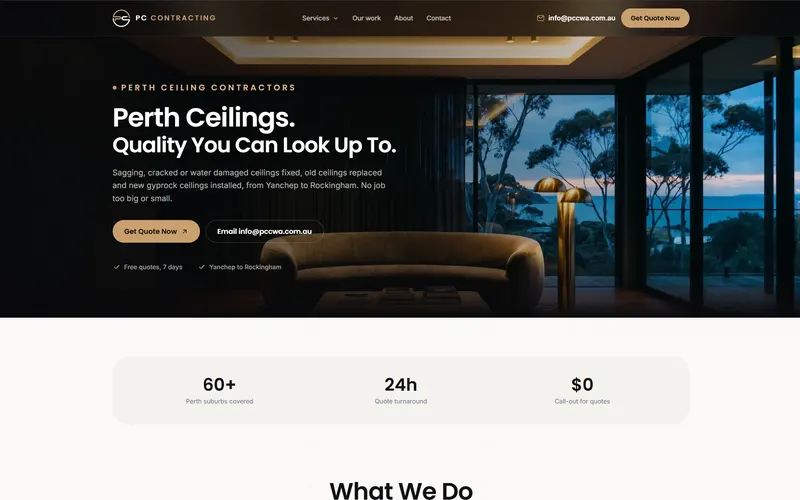
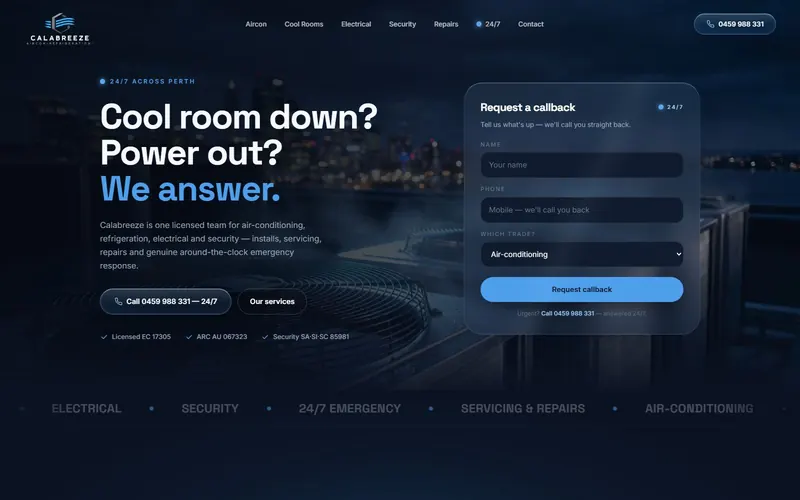
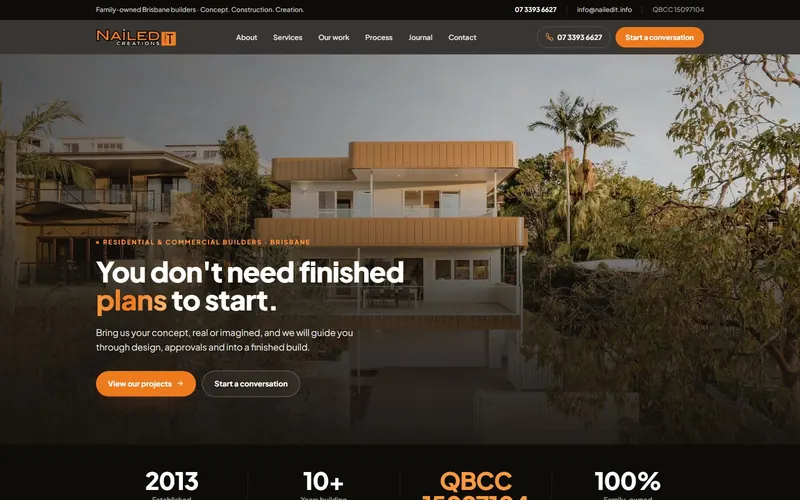
Most plumber website design projects go live in 2 to 4 weeks. We've built the same way for other trades, like Calabreeze, a Perth air conditioning, refrigeration, electrical and security contractor that started with no website, no Google Business Profile and no tracking. For more on trade sites in general, see our page on websites for tradies.