




What is generative engine optimisation?
Generative engine optimisation, usually shortened to GEO, is the work of getting your business found, trusted and quoted by AI tools that write answers instead of listing links. Think ChatGPT, Google AI Overviews and AI Mode, Perplexity and Microsoft Copilot. You'll also hear it called GEO SEO, LLM SEO or AI SEO. They mostly mean the same thing.
The term comes from a research paper by Pranjal Aggarwal and colleagues, first published in November 2023. They tested different ways of rewriting web content across a benchmark of 10,000 queries. Some changes, mainly citing sources, adding quotations and adding statistics, lifted how visible a source was in AI answers by up to 40% in their tests.
That's a lab result, not a promise. But it points at something useful: AI tools favour content that is specific, sourced and easy to quote. It also matters more in Australia now. Google's AI Mode started rolling out here in October 2025, so more searches end with a written answer that names a few businesses instead of a page of links.
How is GEO different from SEO and AEO?
They overlap far more than the labels suggest. SEO gets your pages ranking in search results. AEO (answer engine optimisation) gets your content used as the direct answer to a question. GEO is the newer name for getting cited inside AI written answers. Most of the work is shared.
| SEO | AEO | GEO | |
|---|---|---|---|
| Goal | Rank pages in search results | Be the direct answer to a question | Be cited or recommended in AI answers |
| Where you show up | Google and Bing results, the map pack | Featured snippets, voice assistants, AI answers | ChatGPT, AI Overviews, AI Mode, Perplexity, Copilot |
| What wins | Relevant pages, links, technical health | Clear answers near the top of the page | Specific, sourced, first-hand content AI can quote |
| How you measure it | Rankings, clicks, enquiries | Snippets won, questions answered | Citations, AI referral visits, enquiries |
If someone sells you GEO as a separate thing that ignores SEO, be careful. Google's own guide to its AI features says they run on the same core ranking and quality systems as normal search. We cover the answer side in more depth on our AEO services page.
How do ChatGPT, Google AI Overviews, Perplexity and Copilot choose sources?
Each tool searches the web, picks a handful of pages that seem to answer the question well, and writes a reply that cites some of them. What differs is whose index they search and which crawler you have to let in. Here's what each company says publicly, as of November 2026.
| Tool | Where it finds pages | What you control |
|---|---|---|
| Google AI Overviews and AI Mode | Google's own index and ranking systems. Pages must be indexed and eligible to show a snippet. Google says both may run several related searches behind the scenes, which it calls query fan-out. | Let Googlebot crawl, keep important content as text, keep your Google Business Profile current |
| ChatGPT search | OpenAI's own OAI-SearchBot crawler, among other sources | Allow OAI-SearchBot in robots.txt. OpenAI says sites that block it won't appear in ChatGPT search answers |
| Perplexity | Its PerplexityBot crawler, plus live page fetches when someone asks a question | Allow PerplexityBot in robots.txt and in any firewall |
| Microsoft Copilot | Bing's index | Get indexed in Bing. Bing Webmaster Tools now has an AI Performance report showing Copilot citations |
A few things follow from that. If your robots.txt or your hosting firewall blocks these crawlers, nothing else matters. If Google doesn't rank you anywhere for a topic, AI Overviews are unlikely to quote you on it. And because answers are written fresh each time, the same question can cite different businesses for different people.
What actually helps you get cited in AI answers?
The things that help are mostly good SEO done properly, with extra weight on being specific and easy to quote. In the order I'd fix them:
- Let the crawlers in. Check robots.txt and your firewall for Googlebot, Bingbot, OAI-SearchBot and PerplexityBot.
- Answer the question in the first two sentences. Then add the detail. AI tools quote short, plain answers.
- Use real numbers. Prices, timeframes, suburbs, licence numbers. "From $3,250, live in 2 to 4 weeks" is quotable. "Affordable and fast" isn't.
- Write from first-hand experience. Google's guide specifically favours a unique point of view over content that restates what's already out there.
- Keep your business facts consistent everywhere. Name, phone, address, services and hours should match on your site, Google Business Profile, Bing Places and directories.
- Build a page per service and area. One page that tries to cover everything is hard to cite for anything.
- Earn genuine mentions. Reviews, local press, industry associations and suppliers who mention you by name.
- Use structured data that matches the page. FAQ, service and business schema won't force a citation, but it helps search engines read the page correctly and makes rich results possible.
What does Google say doesn't work?
Google publishes a guide to optimising for its generative AI features, last updated in July 2026, and it's blunt about several popular GEO tactics. In short, Google Search doesn't need any of them:
- llms.txt files: Google says Google Search doesn't use them, and they neither help nor harm your visibility there. Other AI tools may still read them, which our llms.txt guide covers honestly.
- Chopping content into tiny chunks: not needed. Google says there's no ideal page length.
- Rewriting everything "for AI": not needed. Write clearly for people.
- Special schema for AI: there isn't any. Normal structured data is still worth doing for rich results.
- Chasing inauthentic mentions: Google says it isn't as helpful as it might seem.
- Pumping out a page for every query variation: that falls under Google's scaled content abuse spam policy.
That's Google's view of Google. ChatGPT, Perplexity and Copilot work differently, which is why crawler access and clear answers matter for them too. But if a GEO pitch is mostly llms.txt and AI-only rewrites, it's selling the easy part and skipping the work that counts.
How do you measure generative engine optimisation?
Imperfectly, for now. No tool shows you every AI answer that mentions your business, because answers change by person, location and wording. So combine a few signals:
- Google Search Console: Google says clicks from AI Overviews and AI Mode are counted in its Performance reporting, and its AI guide points to a generative AI performance report.
- Bing Webmaster Tools: the AI Performance report, in public preview since early 2026, shows how often Copilot and Bing's AI answers cite your pages and the grounding queries behind them.
- GA4 referrals: visits from chatgpt.com, perplexity.ai, copilot.microsoft.com and gemini.google.com show up as referral traffic.
- Manual checks: once a month, ask the main tools the 10 to 20 questions your customers actually ask, and note who gets named.
- Ask new customers: "How did you find us?" It's the cheapest tracking there is.
Watch the trend over months, not a single result on a single day.
How we build for generative engine optimisation
Every site we build follows the same rules, and three recent builds show what that looks like in practice. All three launched in September 2026.
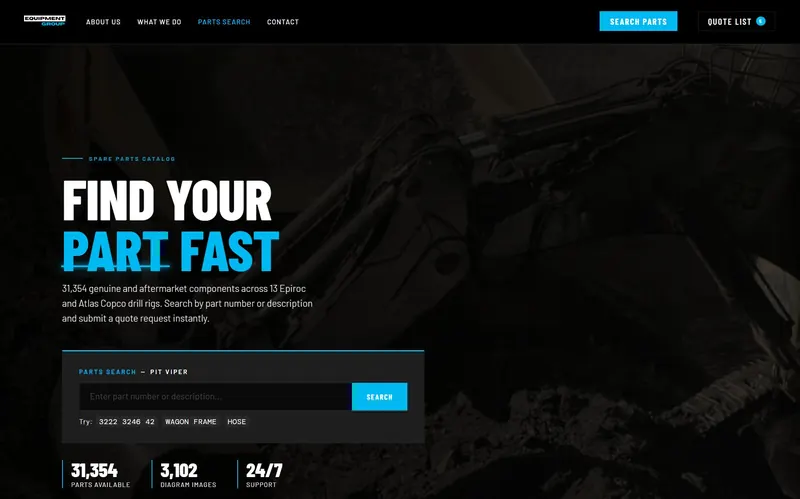
- Nailed It Creations, a Brisbane custom home builder: 87 questions in FAQ schema across 19 pages, an llms.txt file, and the whole site rebuilt around his paid preconstruction process with one call to action.
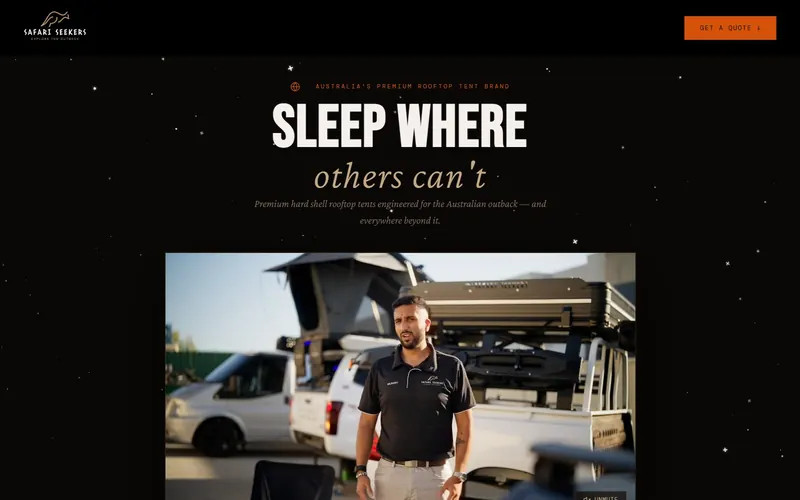
- Perth Ceiling Contracting: a new name with zero organic keywords before. 12 pages, each mapped to a real search from live keyword data, 79 FAQ schema questions and prices published on the page, which gives AI tools a real number to quote.
- Calabreeze, a Perth aircon, refrigeration, electrical and security contractor that had no website or Google Business Profile: an 8 page site built from live search data, 66 real job photos, structured for AI search, with GA4 and Search Console from launch.
What they share is the unglamorous stuff done well: AI crawlers allowed, a page per service, plain answers at the top, real prices and photos, and schema that matches what's on the page.
Can Source Digital do generative engine optimisation for my business?
Yes. Most businesses start with an AEO audit, from $1,500 ex GST. It checks crawler access, page structure, answers, schema and business listings, and gives you a list of fixes in priority order.
From there we can make the changes across your site, usually $3,000 to $8,000 ex GST depending on pages and complexity, or roll it into ongoing SEO and AEO from $950 a month ex GST. Every quote is fixed and in writing before work starts, with no lock-in contracts. See our AI SEO agency service for what's included.
Who it's not for: if you don't have a website yet, or your Google Business Profile is empty, start there. GEO builds on a solid site. It can't replace one.